

admissions essay

What Makes a Successful Admissions Essay?

What Makes a Successful Admissions Essay

Many students imagine college admissions officers as some of the most brilliant people in the world — carefully judging every sentence and measuring a student’s worth with a fine-tooth comb. That idea can feel overwhelming. 

That’s not the reality — not by a long shot, not even for the most selective of schools. 

Admissions officers are regular people doing a busy job. They may read 50 to 100 essays in a single day. They’re not searching for perfection — nor are they required to, as perfection is fantasy. 

They’re looking for essays that capture their interest and help them remember a student among many.

So how can you make your essay stand out?

Tell a clear, personal story

Strong essays focus on a specific moment or experience. You don’t need a dramatic life story. Students often stress about not having a story that’s tragic enough to tell: this is a good thing! Most reasonable adults aren’t hoping for severely traumatized students who had to face horrors and injustices before their brains were fully developed. 

Even small, ordinary moments can be powerful if they show something meaningful about you. 

The only task you have as a student is to make meaning and engage your reader. 

A well written story helps the reader stay engaged and understand who you are.

college writing

Use your authentic voice

Many students try to sound overly formal or “impressive.” 

One common mistake that we see in admissions essays is using the essay to recreate your resume in prose form rather than bullets. 

Furthermore, they focus on overselling themselves: they discuss how they are ALWAYS honest, ALWAYS eager to learn, ALWAYS perfect, perfect, perfect. 

But this often makes the essay feel fake. 

Admissions officers can tell when a voice isn’t genuine. 

Write the way you naturally speakclear, honest, and true to yourself. Don’t be afraid to use humor or reveal your dreamy nature. 

Your real voice is what makes your essay memorableit turns an essay into a human voice rather than just another robotic resume. 

Your personal essay also shouldn’t be written in the same formulaic style in which you write for school: it’s a place to flex your creative muscles and show some of your unique flourish. 

Show reflection and growth

writing

It’s not enough to describe what happened in a story. 

For students who choose to detail descent into the underworld narratives, this is often the big mistake: they detail a severe trauma…and then expect the reader to make meaning of it and choose them out of sympathy. 

Empathy is something that’s on a spectrum: it can’t be guaranteed your reader will feel the way you feel or even have sophisticated skills of emotional empathy. Admissions officers are ordinary, diverse peoplelike anyone in any career field. 

Therefore, you need to explain what you learned. You need to make meaning.

Surprise the reader: bloom from mud like a lotus flower. 

How did the experience change you? What did it teach you about yourself or the world? 

Reflection shows maturity and critical thinking, while helping the reader see your personal growth and individual personality.

Trying to include too many topics can make your essay confusing. 

A common error in personal essays for college admissions is treating it like an autobiography of your life story from birth do current day when you really need to be treating it like a miniature memoir. 

Instead, choose one central theme or story and build your essay around it. 

A focused essay is easier to follow and leaves a stronger impression.

Use specific details

Avoid general statements like “it was important” or “I learned a lot.”

This is where your skills of creative writing matter. 

Use strong verbs, vivid adjectives, and descriptions that appeal to the senses. Show, don’t just tell.

Make the reader feel as if they are with you by providing clear examples. Describe small details, actions, or moments. 

These rhetorical choices bring your story to life and make it more interesting to read.

Keep your writing clear and simple

Another problem that is see-through: the student that tries to drop “ten-cent” words every other sentence. 

They discuss their ignominious feelings after losing a contest.

 They describe their truculent fights with a sibling. They bemoan the ubiquitous toxic messages on social media.

They have the admissions officer scrambling for a dictionary, even at schools like Harvard. 

You don’t need complicated sentences or big words to impress anyone. 

In fact, simple and clear writing is often stronger. Admissions officers read quickly, so your ideas should be easy to understand. 

Clear writing shows confidence and strong communication skills.

Save the ten-cent words for SAT studies. 

writing

Show your values and purpose

A main goal of admissions isn’t to choose a PERFECT student, but to choose a student that fits with the values and ideology of the campus and its student demographics. 

Therefore, by the end of your essay, the reader should understand what matters to you. 

What do you care about? What motivates you? 

Your essay should give insight into your character.

Revise and improve your draft

writing

As I always tell my students, real writing IS revising. 

It’s not until you’re revising that you’re actually writing. 

Before then, you’re drafting. 

No great essay is written in one try. (And no, ChatGPT doesn’t write great essaysit writes mostly grammatically sound and minimally competent essays, but not great). 

Strong essays go through many revisions. 

This is where tutoring can be especially helpful. 

A tutor or mentor can guide you, give feedback, and help you strengthen your ideas and structure.

In the end, a successful admissions essay isn’t about being a genius (why would you need college at all if you’re already so great?) 

It’s about being authentic, caring, curious, clear, and committed to continued growth. 

Remember, the person reading your essay is human. They’re tired, busy, hungry, and reading many essays in a row. 

When your writing feels honest and engaging, it gives them a reason to pauseand to remember you.

Getting support on your admissions essay

Whether your student is still finding their voice on the page or working through their fifth revision, Jamie The Scholar can help. Our tutors work alongside students — not over them — to strengthen ideas, sharpen structure, and make the writing feel like theirs.

Call us at 888-577-3224 or visit jamiethescholar.com.

Visit jamiethescholar.com or call us at 888-577-3224 for a free consultation to get started

What to Do If You’re Not Happy with Your SAT or ACT Score (and When to Submit It)

What to Do If You’re Not Happy with Your SAT or ACT Score (and When to Submit It)

Has your child studied, showed up on test day, and waited anxiously for their SAT or ACT results only to feel disappointed when the scores arrived? If that sounds familiar, you’re not alone.

Many students don’t reach their target score on the first try, and the pressure to perform can feel overwhelming. But here’s the truth: a single test score isn’t the final word on college admissions, and there are smart ways to move forward. While a handful of students walk in and magically score a 35 or a 1570, most need to study and retake the exam three to five times to truly reach their potential.

What To Do When a Score Falls Short 

 A lower-than-expected score can feel discouraging, but it’s also an opportunity. Here are three steps students can take:

1). Retake the Test with a Focused Plan

First, reflect on what went wrong. Was timing an issue? Did nerves get in the way? Were there specific sections that felt especially hard? Once the obstacles are clear, students can address them directly. This could mean practicing pacing, reviewing tricky math concepts, or building confidence through repetition.

2).Work with a Tutor

At Jamie the Scholar, our SAT and ACT tutors personalize their approach based on each student’s strengths and challenges. With expert guidance, students can transform their weak spots into strengths, raising their scores more efficiently than trying to do it on their own.

3). Use Superscoring to Your Advantage

Many colleges superscore, meaning they combine the highest section scores from multiple test dates. For example, if your child earned a higher math score on their second try and a better reading score the first time, the school will take the best of both.

Understanding What “Test-Optional” Really Means

In recent years, many colleges have adopted test-optional admissions policies. That means students can choose whether or not to submit SAT or ACT scores as part of their application. But test-optional doesn’t mean test-unimportant.

If your child’s score is at or above a college’s middle 50% range, the range in which the middle half of accepted students scored, it’s often worth submitting. Scores in this range can strengthen their application, especially if other areas (like GPA or extracurriculars) are average. However, if the score falls well below that range and doesn’t align with the student’s academic profile, holding it back may be a better strategy.

Even at test-optional schools, test scores can still serve a purpose. A strong SAT or ACT score might boost your child’s eligibility for merit-based scholarships, increase their chances of being invited to honors programs, or provide added context when their GPA isn’t as strong. Submitting a score isn’t always necessary, but when it works in your child’s favor, it can quietly move their application from the “maybe” pile to the “let’s take a closer look” stack.

Strategic Planning Makes All the Difference

Sometimes a lower score isn’t the issue—it’s how the college list is built around it.

That’s where experts like Jackie Postelnick at Conscious College Planning come in. 

Jackie helps students create a college list that reflects their values, strengths, and goals, taking into account everything from academic fit to financial aid and merit scholarship potential. 

She also helps families navigate test-optional policies strategically, so students submit scores where they add value and hold them back where they don’t.

Supporting Your Student’s Next Steps

Whether your student is just starting their test prep process or aiming to hit a target score, we’re here to support them every step of the way.

One test score doesn’t define your child’s potential, and it definitely shouldn’t define their future. With the right support and strategy, students can move forward with clarity, confidence, and a strong college application.

If your student could use extra support, we’re here to help:

  • Work with Jamie the Scholar to boost their test prep and confidence.
  • Connect with Jackie Postelnick to build a thoughtful, balanced college list that reflects your child’s unique path.

There’s always a way forward, and we’re ready to walk it with you.

Test Prep in the Real World

Test Prep in the Real World

Test prep is oftentimes the bane of a high schooler’s existence. It’s usually relegated to the corner of a student’s life, while other commitments take priority. It’s easy for teenagers to see ACT/SAT tutoring as more work. It’s harder for them to see it as extra support for getting ready for post-high school life.

Seeing test prep only as a method to get the desired score is understandable and vital, but it can rob students of gaining more out of their efforts. 

This is why, at Jamie the Scholar, we make sure that students see that what they’re learning is relevant to real-life situations. Here are three ways that students’ test prep efforts with our team help them even after they achieve their goal scores.

1. The Verbal Sections Train Students to Derive Meaning

As students study for the Verbal sections of their exams, they learn to grasp the main points of what they’re reading. This is a key way that people gain new knowledge, even as adults. As our lives become fuller, knowing the main ideas of what we read is how we know that we’re reading efficiently.

The more challenging questions, like the ones requiring inferences, push students to pay attention to what is unsaid. In addition, students have to process the information in front of them in order to arrive at their own conclusions.

This skill is like “reading the room” when you arrive at a social event. You walk in, there is a lull in the atmosphere, and everyone who’s there is silent, disconnected from each other, and on their phones— no one would need to tell you that people aren’t enjoying themselves, so you’d likely want to spend your time somewhere else!

2. The Math Sections Help Students Use Information to Their Advantage.

tutoring

The Math sections help students to sharpen their logical thinking skills. In other words, they learn to leverage numbers and information in order to arrive at a specific result. 

Just as students solve problems on these exams, they will continue to solve problems in their lives. Math-focused test prep sessions often exemplify this.

For example, both tests feature questions involving graphs, which require students to spot trends and make predictions. This is a skill that entrepreneurs use in order to predict future sales and growth trajectories of their businesses.

Along with data-related questions, the questions that focus on arithmetic help students work accurately with numbers. Shopping is the real-world context of this life skill because numbers-based reasoning is important for splitting a restaurant bill amongst friends or determining whether a concert ticket purchase fits into your personal budget.

3. Both Exams Help Students Think Ahead About College and Career Choice.

Students taking the ACT complete an Interest Inventory, which helps students to understand potential college majors and occupations that match their preferences. Similarly, students taking the SAT complete the Student Data Questionnaire, which asks about similar information.

Those results are then used for connecting students with scholarship opportunities and colleges that are a strong fit for them. These questionnaires give students a chance to remember their own preferences, aside from the influence and social comparisons involving their peers.

Achieving the goal score is the focal point of test prep tutoring, but gaining self-knowledge and refining real-world skills is how those tutoring hours benefit students even after they finish high school. Students can use those skills and self-awareness both now as teenagers and as adults making their way in the world.

Ready to Build Skills That Last Beyond Test Day? Work With Us!

At Jamie The Scholar, we prioritize both the numbers and the high-level abilities that equip students for life after high school. Our personalized approach helps students not only reach their goal scores, but also strengthen the real-world thinking skills they’ll need in college, careers, and beyond.

Whether your student is just starting their test prep process or aiming to hit a target score, we’re here to support them every step of the way.

Join the many families who have seen their teenagers achieve their goal scores and also grow in confidence and independence with our expert guidance. Contact us today to learn how we can help your student succeed — both on test day and in the future!

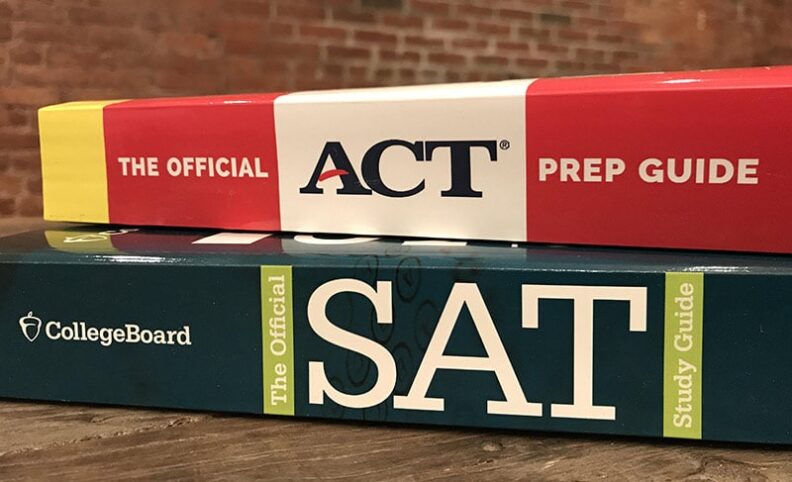
Test preparation books for the SAT and ACT

How Your SAT/ACT Score Really Affects College Admissions (and Scholarships!)

How Your SAT/ACT Score Really Affects College Admissions (and Scholarships!)

Are you confused about whether SAT or ACT scores still matter? With shifting college admissions policies, it’s understandable why parents and students often wonder if standardized tests are worth the stress. Here’s the simple truth: despite recent changes, these scores can still significantly impact your child’s admissions chances and scholarship opportunities.

Do Colleges Still Care About SAT/ACT Scores?

Colleges across the country approach standardized tests differently:

  • Test-Optional: Schools like Bowdoin College and Bucknell University let students decide if they want to submit scores. Other institutions, such as the University of Denver and the University of Chicago, also offer flexible admissions options that do not require standardized test scores.
  • Test-Required: Institutions like Florida’s public universities still require SAT or ACT scores for admission.
  • Test-Blind: The University of California system no longer considers SAT/ACT scores in its admission process, even if submitted.
Test Preparation

 Understanding these policies can help you decide whether investing time in test preparation makes sense for your child. In fact, more than 80% of U.S. four-year institutions are test-optional for Fall 2025. But what does test-optional really mean?

Why SAT/ACT Scores Still Matter

Standardized test scores are only one piece of the college admissions puzzle, but they remain influential, especially at competitive schools. Admissions committees consider various factors, such as:

  • GPA and class rank
  • Course rigor (AP, IB, Honors)
  • Extracurricular activities and leadership roles
  • Letters of recommendation
  • Personal essays

Even with these considerations, a strong SAT or ACT score can significantly enhance your child’s application, providing a competitive edge over similarly qualified applicants. They also demonstrate a student’s readiness to handle college-level work, giving admissions officers additional confidence in their ability to succeed.

Scholarships and Financial Benefits

College admissions

The financial impact of a high SAT or ACT score can be considerable. Many colleges offer automatic merit-based scholarships to students meeting specific GPA and test-score thresholds. For example:

  • At the University of Tennessee, a student with a 26 ACT might gain admission without scholarships. However, if that student improves their score to a 32 ACT, they automatically qualify for a renewable $13,000 annual scholarship, totaling $52,000 over four years.

Other school examples include Miami University of Ohio, Arizona State University, the University of Alabama, and the University of Missouri (Mizzou), all of which offer significant scholarships based on standardized test performance.

Top-tier universities, like the University of Notre Dame and the University of Chicago, also offer merit scholarships to students with exceptional SAT or ACT scores. Simply put, better scores can translate into significant financial savings.

Taking the Next Step

Improving SAT or ACT scores not only opens up more admissions options, but can also lead to meaningful financial aid through merit scholarships. With the right support, students can feel more confident in both the testing process and their overall college planning journey.

At Jamie the Scholar, students receive expert SAT/ACT tutoring designed around their unique strengths and challenges. And with guidance from experts like Jackie Postelnick at Conscious College Planning, families can craft thoughtful, well-matched college lists that set the stage for long-term success.

When tutoring and planning work together, students thrive—and their college applications show it.