

A photo of people's hands holding pens and writing.

When Points Turn Into Possibilities: My Best Moments as a Tutor

When Points Turn Into Possibilities: My Best Moments as a Tutor

By Anne Champion

When I entered academia as a career, I thought the greatest moments would be in the classroom. I fancied myself like Robin Williams in Dead Poet’s Society, reciting literature with such a devoted aplomb that my students can’t resist being enlightened by the classics.

I thought my success would be measured by the same standards I measured my worth as a student: in checkmarks, in corrected commas, in diaphanous sentences, in the quiet thrill of high scores—both of my students and of my student evaluations. 

As a child, I lived by the neat arithmetic of learning as a form of validation and perfection-chasing: where did I lose points, what did I fail to explain well enough, what small mistake could I diagnose and fix before it hardened into something permanent?

I kept score because it felt responsible. It felt safe. If I could find the flaw, I could mend it. If I could mend every flaw, I’d earn the right to be alive, to be loved, to be enough. 

But after 20 years of teaching, I stepped down into a part-time teaching role and devoted myself to more individual tutoring. I’ve always tutored part time, so I simply flipped the script to emphasize that role more, because, over time—quietly, almost imperceptibly—the meaning shifted.

I recognized that my most beautiful learning moments were happening as a tutor, not in the classroom. Though I love and value my work in the classroom, I found that the magic happened more often one on one. 

I experienced it the other day. I’m working with a middle school student whose mother was concerned that her informational writing isn’t as strong as her creative writing, which she’s passionate about. I designed a project that caters to her interests in mythology, and I watched her eyes light up as I revealed the guidelines. 

“How do you feel about it?” I asked.
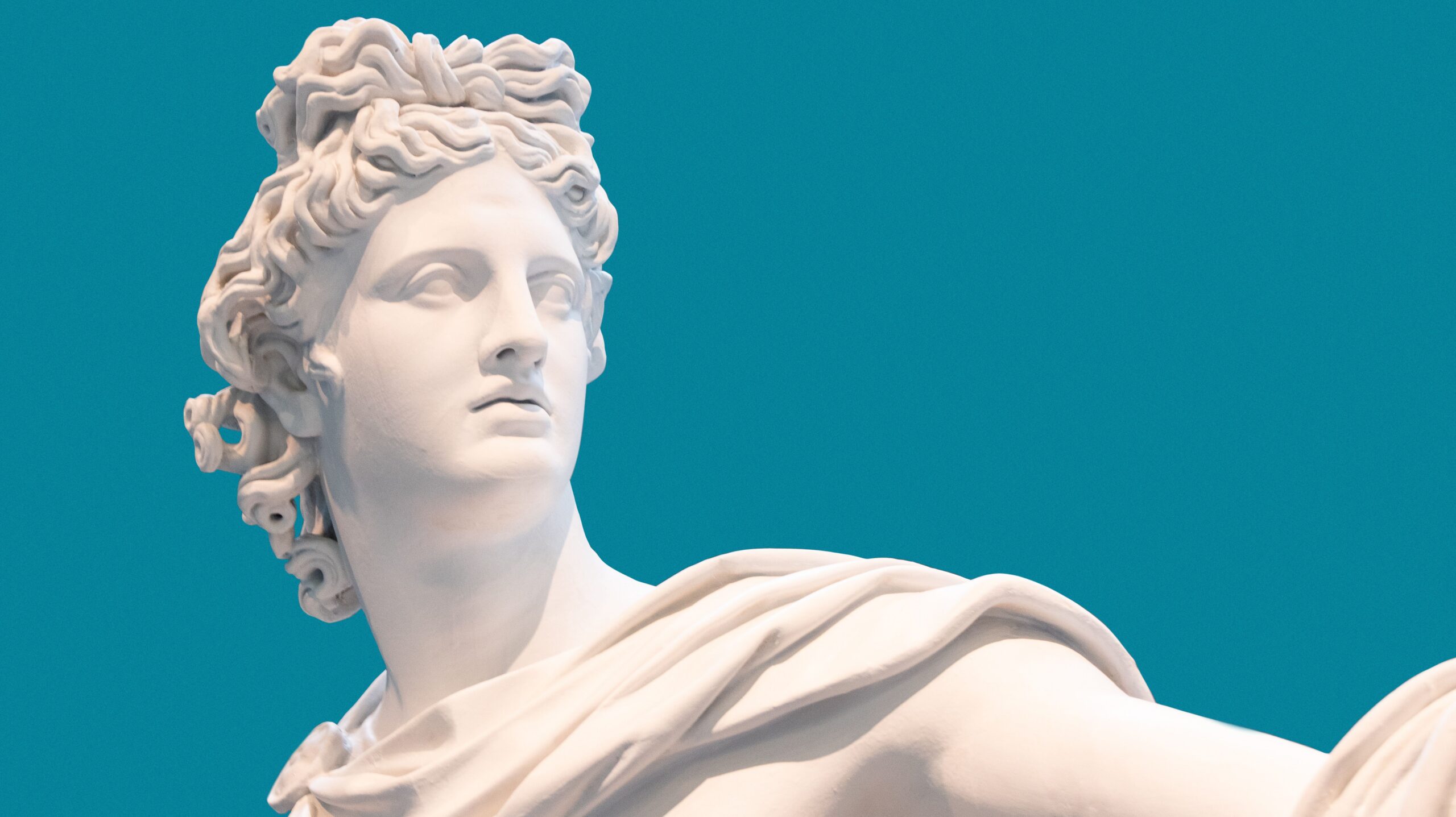
A sculpture of Apollo, a prominent figure in Greek Mythology.

“I feel pretty excited!” She squealed. 

Her task was to research a creature she’d never heard of before. Within seconds, she was furiously typing into Google, reading about all her options. 

There it was: the magic. 

The joy of learning for the sake of learning. 

The magic of a curious, creative mind. 

The best moments for me as a tutor are when where did I lose points becomes what do I get to create or discover? 

I realized long ago that learning isn’t merely memorization or the transfer of answers and that true intelligence is far too complex to be measurable. 

Real learning is the opening of doors in the mind. 

In many tutoring sessions, especially in the most meaningful ones, the question itself changes. Instead of chasing what’s wrong, we chase what’s possible: the sentence a student didn’t know they could write, the argument they didn’t know they could form, the insight they’d never dared to articulate. 

My own educational experience and my insecurities had trained me to treat learning like a ladder: climb, reach, earn accolades as proof of worth. 

Tutoring taught me it could also be a doorway: step through, breathe, wonder.

EVOLVE. 

An empty academic lecture hall.

In the beginning, I carried the habits of traditional teaching with me—lectures polished to a shine, pacing designed for the average student, explanations built to last an entire room. And yet, I learned why those beautiful moments rarely arrived in that environment. 

College teaching, over time, became a barrage. So much of what surrounded it felt misaligned with the soul of education. There was AI: shortcuts that erased the struggle without producing understanding. There were students trapped in the toxic treadmill of competition-chasing. As at all costs, treating learning like a transaction instead of a transformation. They wanted clout and success, yes, but often without the willingness to read closely, to grapple with difficult ideas, or to engage with other creative minds as if those minds mattered. On top of those toxicities, a classroom can be full of a whole host of personal or mental health crises that can be difficult for one overworked person to manage. 

Eventually, it became soul crushing. I’d stand in front of a room full of potential, and too often I felt like I was speaking to the echo of performance rather than the presence of curiosity. I could see the hunger for grades. I couldn’t always see the hunger for meaning. 

Then I made the leap to switching my focus upon one-on-one tutoring, and suddenly the air changed.

One-on-one space is intimate in a way the classroom can’t imitate. When a student sits with me and trusts me, there’s room for their real self to enter the conversation: their confusion, their fear of being wrong, their pride when something finally clicks. I felt that trust gather like light. In that light, I could still find the moments I’d feared were gone. I could find them because they were still possible—just in a different form.

I learned to listen for their creative drives and curiosities like they were instruments waiting to be tuned. One student wanted to write like they were telling a secret; another needed stories that felt like escape; another craved structure so their imagination could finally feel safe enough to roam. When I adjusted my approach, their eyes changed. The work stopped being a burden and became a playground—something they could build with.

And then there were the moments I hold most gently: when students trusted me to go deep into emotionally vulnerable territory. They brought me poems they didn’t want to admit they’d written with shaking hands. They asked for help shaping college application essays that carried more truth than they could safely say aloud. They spoke about a first crush—how hope can be both thrilling and terrifying. They told me about loss, about the ache of a pet gone too soon, about the strange silence that follows grief like fog. Sometimes the pain was tangled with a loved one, complicated and hard to name.

In those sessions, I’m reminded why writing is so sacred to me: I was helping them survive their own emotions long enough to transform them into language.

I also found unexpected tenderness in the old classics. Reading Frankenstein and Shakespeare out loud with students struggling with reading or ADHD became its own kind of ritual. We’d stumble through lines together, then pause—sometimes right in the middle of something tragic—to talk about what we felt. How sad we were for the monster, how gullible and insecure Othello could be, and how easily love can become the doorway to manipulation when certainty is fragile. 
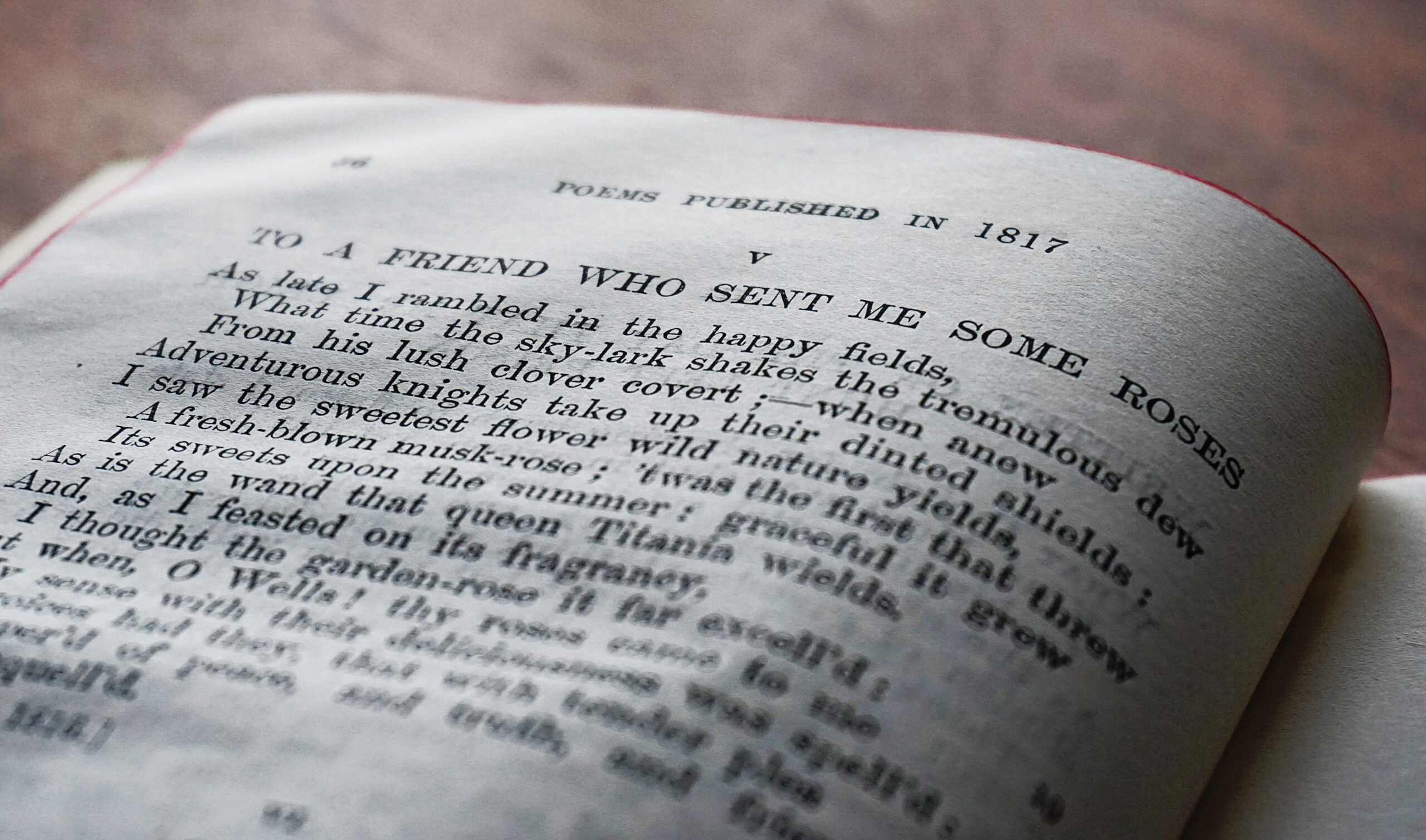
 

An open vintage, classic book with lines from a script.

There’s something profoundly beautiful about discovering that literature isn’t a museum with a teenager, about showing them how the past is still alive in the mouth, in the mind, in the breath shared between two people who care enough to listen.

In the end, I learned that the most beautiful moments as a tutor are defined by awakening. 

So I wrap these memories in a kind of promise: learning can still be human, it can still be a gift and not a penance. That curiosity can still catch fire. That trust can still open doors. And that, in the one-on-one hush of tutoring, I was allowed to witness students grow—academically, emotionally, imaginatively, and bravely—until education stopped feeling like a race and started feeling like a home.


Where Curiosity Finds Its Doorway

Anne’s story begins with a familiar question (“Where did I lose points?”) and ends with a deeper one: “What do I get to discover?” 

At Jamie The Scholar, our tutors are chosen for their capacity to ask that second question. They meet each student where they are, listen for their interests, and curate learning experiences that feel less like a race and more like a place to belong.

Call us at 888-577-3224 to learn more.

Writing Competitions and Judging them

What Creative Writing Contest Judges Actually Look For

When There Isn’t a Right Answer: What Creative Writing Contest Judges Actually Look For

As a writing tutor, one of the most common questions my creative writing students ask me is: What do judges want?

It’s an understandable question. We live in a world obsessed with rubrics, answer keys, and standardized tests. Many studentsespecially those educated in systems that heavily emphasize testing and memorizationhave been trained to believe there is always one correct answer and knowing that correct answer is the pathway to social validation and achievement. 

Creative writing doesn’t work that way.

While standardized tests work well to maintain the social conformity and lack of critical thought required for authoritarian systems to function, the arts fall on the opposite end of the spectrum: they demand freedom, critical thought, evolution, and individuality. 

My own journey as a writer began early. My first publication came when I was nine years old (in a werewolf magazinemy parents raised me on gothic horror). As a teenager, I won my first writing awards. Since then, I’ve gone on to win book publication contests, receive the Academy of American Poets Prize, earn multiple national Pushcart nominations, and publish hundreds of poems and essays.

As a writing professor and tutor, I’ve also had the privilege of helping students place in prestigious competitions, including the Scholastic Art & Writing Awards.

And yet, despite all that experience, my answer remains frustratingly simple:

There’s no formula that guarantees success

That uncertainty can be terrifying. I’d argue that it’s part of the challengeand the lessoninherent in creative work. 

Many high achieving students have spent a lifetime learning to follow instructions perfectly. 

They know how to identify the right answer, use the right structure, and satisfy the expectations of authority figures. When faced with a blank page and genuine creative freedom, they often feel lost and terrified.

Some students become so afraid of being wrong that they stop trusting themselves entirely. 

Badge for writing student

We are seeing this problem manifest in real time with their access to AI: even at the college level, we witness how many students are eager to offload their thinking to AI because the risk of revealing their authentic voice feels too risky. If an algorithm can generate the grammatically correct answer, then perhaps they can avoid failure altogether.

Recent research has even identified that students who rely on AI for school work have reduced brain wave function overall when tasked to do any writing on their own.

In short, they’ve adapted to NOT think altogether, as a means of being seen as “smart,” a terrifying new phenomenon. 

But art asks something different of us

It always hasits history is transgressive.

Art asks us to think.

Art asks us to feel.

Art asks us to risk being misunderstood.

Art even asks us to risk being disliked, persecuted, rejected. 

This is one reason poetry and other creative arts often provoke confusion or even disdain. Students want to know: What’s the right answer? 

How do I get the authority figure to choose me as “the best?” They want this because they’ve been told it’s important for their economic future. 

The answer is that there often isn’t a right answer, and good art has depth, which means that its usage is to the soul and social evolution, history, and cultural preservation and reflection. 

Freedom is valuable in art.

Tradition is also valuable in art.

The tension between those two things is where much of the magic happens.

Sometimes, getting students to trust that there’s magic on the journey of creative exploration is akin to asking them to jump off a bridge trusting only a bungee cord. 

It’s tragic when you think of it: nearly all of us were enthusiastic artists as children. Somewhere along the way, it was trained out of us. 

I can’t count how many times I’ve taught a student athlete who tells me that they used to love to read as a child, until school made them hate it. 

Likewise, I felt that people around me, especially adults, did everything possible to break my love for writing. They laughed at my desires to study poetry, when poetry is the most ancient artform of language that exists, pre-dating prose and even written language. It plays a role in everything from marketing jingles to popular music to embodying the voices of disenfranchised communities. Why wouldn’t someone study that?

Because it’s not profitable, they say. 

I’m not regretful of my life path with the creative arts: it gives me wealth inside my soul in myriad ways. 

Since attaining my MFA and publishing, I’ve served as a poetry reader, a poetry editor, and a contest judge many times. Even though creative arts require freedom, there are qualities many judges consistently appreciate:

  • Economy of language
  • Strong imagery
  • Purposeful use of literary and poetic techniques
  • Emotional honesty
  • Originality
  • Critical thought
  • Courage
  • Knowledge of craft
  • Effective revision
  • Meaningful themes
  • Attention to rhythm and sound
  • Technical skill
  • A unique perspective or voice

Judges are usually people who, like myself, take the arts very seriously

We’re immersed in creating and consuming art in our daily lives, so we can often tell when a writer has studied their craft like we have. 

That doesn’t mean every poem needs to be written in a strict form, but knowledge matters. A student who understands sonnets, villanelles, sestinas, dramatic monologues, narrative structures, symbolism, and poetic traditions has more tools available to them than a student who relies solely on instinct.

Judges read hundreds, sometimes thousands, of entries. Unlike standardized test graders, we aren’t looking for conformity dressed up as perfection. So intellectual curiosity, vulnerability, humor, ambition, risk-taking, innovation, or a willingness to tackle difficult questions is something that can make you stand out. 

However, it’s important to remember that judges are human beings.

Another flaw in thinking about contest models is the assumption that all authority figures making these decisions are all-knowing, smarter than everyone else, and perfect. 

But they’re as ordinary, and diverse, as anyone else you meet. 

They have preferences.

They have biases and even prejudices (unfortunately).

They have favorite styles and subjects.

They have good days and bad days.

Sometimes your work isn’t selected because it genuinely wasn’t the strongest entry. Sometimes it isn’t selected because it wasn’t the right fit for that particular judge on that particular day.

Rejection isn’t always personal.

Things That Often Scream “Amateur”

  • Heavy reliance on clichés
  • Overexplaining emotions instead of creating experiences
  • Excessive sentimentality
  • Forced rhymes
  • Manipulated syntax
  • Predictable endings
  • Lack of revision
  • Mixed metaphors
  • Haphazard use of punctuation
  • Generic language
  • Imitating another writer’s voice instead of developing your own
  • Writing solely to impress rather than communicate
  • Confusing obscurity with depth
  • Using complicated vocabulary that doesn’t feel natural
  • Ignoring the basics of grammar, punctuation, and formatting (don’t center your poem on the page!) 

Perhaps the most important lesson contests can teach is that winning isn’t everything.

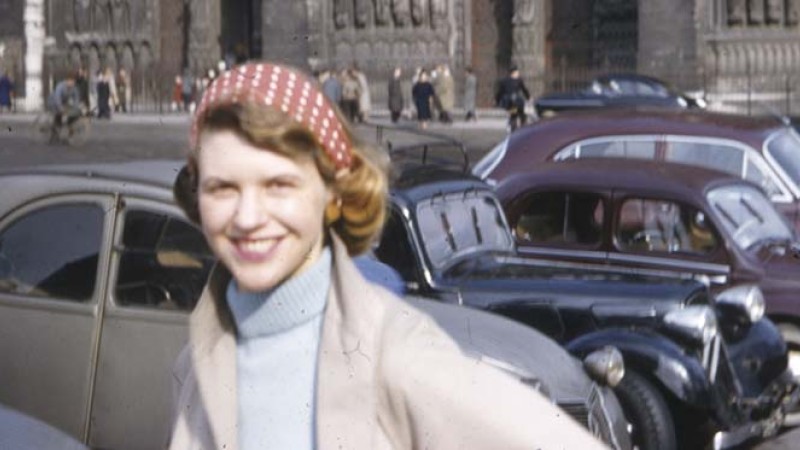
Sylvia Plath and writing competions

Some of the finest writers in history accumulated mountains of rejection letters.

Failure is not evidence that you lack talent. More often, it is evidence that you are participating.

Sylvia Plath, a poet who didn’t attain fame until after her death (winning a Pulitizer and advancing feminist causes, no less), viewed submission itself as a meaningful accomplishment. 

She saved her rejection letters as badges of courage and commitment. 

There’s wisdom in that perspective. Every time you finish a piece, revise it, and send it into the world, you’ve already succeeded in carrying a goal to completion.

The final piece of advice I give every student is also the simplest: Consume art

Read books.

Read poems.

Visit museums.

Watch films thoughtfully.

Attend readings.

Support other artists.

Don’t become the kind of person who desperately wants an audience but refuses to be an audience for anyone else.

If you never read, never engage, never learn from the work of others, you’re limiting your own growth and engaging in hubris. Art is a conversation that stretches across generations. To participate meaningfully, you must first listen.

Be generous.

Be humble.

Stay curious.

Commit yourself to learning.

The students who develop into exceptional artists are the ones who fall in love with the craft itself.

The awards may come laterand they’re bonuses to the work, as most artists don’t want to create in a vacuum but to have their work engaged with. 

Still, the deeper reward is becoming someone capable of creating meaningful work and continuing to grow long after the contest ends.

Where Guidance Meets the Page

Whether your student is preparing a submission for the Scholastic Art & Writing Awards or simply discovering a love of writing, finding the right guidance can make all the difference.

At Jamie The Scholar, our writing tutors work alongside students to strengthen their craft, build confidence on the page, and develop a voice that’s genuinely their own.

Call us at 888-577-3224  to learn how our tutors can support your young writer.