


When There Isn’t a Right Answer: What Creative Writing Contest Judges Actually Look For
As a writing tutor, one of the most common questions my creative writing students ask me is: What do judges want?
It’s an understandable question. We live in a world obsessed with rubrics, answer keys, and standardized tests. Many students — especially those educated in systems that heavily emphasize testing and memorization — have been trained to believe there is always one correct answer and knowing that correct answer is the pathway to social validation and achievement.
Creative writing doesn’t work that way.
While standardized tests work well to maintain the social conformity and lack of critical thought required for authoritarian systems to function, the arts fall on the opposite end of the spectrum: they demand freedom, critical thought, evolution, and individuality.
My own journey as a writer began early. My first publication came when I was nine years old (in a werewolf magazine — my parents raised me on gothic horror). As a teenager, I won my first writing awards. Since then, I’ve gone on to win book publication contests, receive the Academy of American Poets Prize, earn multiple national Pushcart nominations, and publish hundreds of poems and essays.
As a writing professor and tutor, I’ve also had the privilege of helping students place in prestigious competitions, including the Scholastic Art & Writing Awards.
And yet, despite all that experience, my answer remains frustratingly simple:
There’s no formula that guarantees success
That uncertainty can be terrifying. I’d argue that it’s part of the challenge — and the lesson — inherent in creative work.
Many high achieving students have spent a lifetime learning to follow instructions perfectly.
They know how to identify the right answer, use the right structure, and satisfy the expectations of authority figures. When faced with a blank page and genuine creative freedom, they often feel lost and terrified.
Some students become so afraid of being wrong that they stop trusting themselves entirely.

We are seeing this problem manifest in real time with their access to AI: even at the college level, we witness how many students are eager to offload their thinking to AI because the risk of revealing their authentic voice feels too risky. If an algorithm can generate the grammatically correct answer, then perhaps they can avoid failure altogether.
Recent research has even identified that students who rely on AI for school work have reduced brain wave function overall when tasked to do any writing on their own.
In short, they’ve adapted to NOT think altogether, as a means of being seen as “smart,” a terrifying new phenomenon.
But art asks something different of us
It always has — its history is transgressive.
Art asks us to think.
Art asks us to feel.
Art asks us to risk being misunderstood.
Art even asks us to risk being disliked, persecuted, rejected.
This is one reason poetry and other creative arts often provoke confusion or even disdain. Students want to know: What’s the right answer?
How do I get the authority figure to choose me as “the best?” They want this because they’ve been told it’s important for their economic future.
The answer is that there often isn’t a right answer, and good art has depth, which means that its usage is to the soul and social evolution, history, and cultural preservation and reflection.
Freedom is valuable in art.
Tradition is also valuable in art.
The tension between those two things is where much of the magic happens.
Sometimes, getting students to trust that there’s magic on the journey of creative exploration is akin to asking them to jump off a bridge trusting only a bungee cord.
It’s tragic when you think of it: nearly all of us were enthusiastic artists as children. Somewhere along the way, it was trained out of us.
I can’t count how many times I’ve taught a student athlete who tells me that they used to love to read as a child, until school made them hate it.
Likewise, I felt that people around me, especially adults, did everything possible to break my love for writing. They laughed at my desires to study poetry, when poetry is the most ancient artform of language that exists, pre-dating prose and even written language. It plays a role in everything from marketing jingles to popular music to embodying the voices of disenfranchised communities. Why wouldn’t someone study that?
Because it’s not profitable, they say.
I’m not regretful of my life path with the creative arts: it gives me wealth inside my soul in myriad ways.
Since attaining my MFA and publishing, I’ve served as a poetry reader, a poetry editor, and a contest judge many times. Even though creative arts require freedom, there are qualities many judges consistently appreciate:
- Economy of language
- Strong imagery
- Purposeful use of literary and poetic techniques
- Emotional honesty
- Originality
- Critical thought
- Courage
- Knowledge of craft
- Effective revision
- Meaningful themes
- Attention to rhythm and sound
- Technical skill
- A unique perspective or voice
Judges are usually people who, like myself, take the arts very seriously
We’re immersed in creating and consuming art in our daily lives, so we can often tell when a writer has studied their craft like we have.
That doesn’t mean every poem needs to be written in a strict form, but knowledge matters. A student who understands sonnets, villanelles, sestinas, dramatic monologues, narrative structures, symbolism, and poetic traditions has more tools available to them than a student who relies solely on instinct.
Judges read hundreds, sometimes thousands, of entries. Unlike standardized test graders, we aren’t looking for conformity dressed up as perfection. So intellectual curiosity, vulnerability, humor, ambition, risk-taking, innovation, or a willingness to tackle difficult questions is something that can make you stand out.
However, it’s important to remember that judges are human beings.
Another flaw in thinking about contest models is the assumption that all authority figures making these decisions are all-knowing, smarter than everyone else, and perfect.
But they’re as ordinary, and diverse, as anyone else you meet.
They have preferences.
They have biases and even prejudices (unfortunately).
They have favorite styles and subjects.
They have good days and bad days.
Sometimes your work isn’t selected because it genuinely wasn’t the strongest entry. Sometimes it isn’t selected because it wasn’t the right fit for that particular judge on that particular day.
Rejection isn’t always personal.
Things That Often Scream “Amateur”
- Heavy reliance on clichés
- Overexplaining emotions instead of creating experiences
- Excessive sentimentality
- Forced rhymes
- Manipulated syntax
- Predictable endings
- Lack of revision
- Mixed metaphors
- Haphazard use of punctuation
- Generic language
- Imitating another writer’s voice instead of developing your own
- Writing solely to impress rather than communicate
- Confusing obscurity with depth
- Using complicated vocabulary that doesn’t feel natural
- Ignoring the basics of grammar, punctuation, and formatting (don’t center your poem on the page!)
Perhaps the most important lesson contests can teach is that winning isn’t everything.
Some of the finest writers in history accumulated mountains of rejection letters.
Failure is not evidence that you lack talent. More often, it is evidence that you are participating.
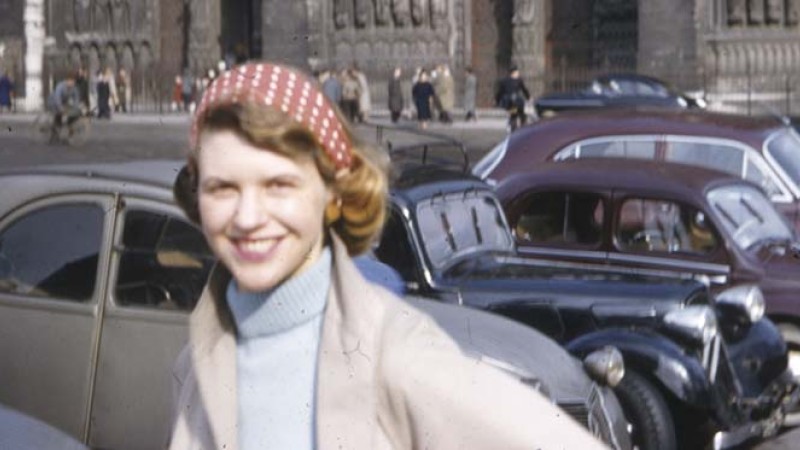
Sylvia Plath, a poet who didn’t attain fame until after her death (winning a Pulitizer and advancing feminist causes, no less), viewed submission itself as a meaningful accomplishment.
She saved her rejection letters as badges of courage and commitment.
There’s wisdom in that perspective. Every time you finish a piece, revise it, and send it into the world, you’ve already succeeded in carrying a goal to completion.
The final piece of advice I give every student is also the simplest: Consume art
Read books.
Read poems.
Visit museums.
Watch films thoughtfully.
Attend readings.
Support other artists.
Don’t become the kind of person who desperately wants an audience but refuses to be an audience for anyone else.
If you never read, never engage, never learn from the work of others, you’re limiting your own growth and engaging in hubris. Art is a conversation that stretches across generations. To participate meaningfully, you must first listen.
Be generous.
Be humble.
Stay curious.
Commit yourself to learning.
The students who develop into exceptional artists are the ones who fall in love with the craft itself.
The awards may come later — and they’re bonuses to the work, as most artists don’t want to create in a vacuum but to have their work engaged with.
Still, the deeper reward is becoming someone capable of creating meaningful work and continuing to grow long after the contest ends.
Where Guidance Meets the Page
Whether your student is preparing a submission for the Scholastic Art & Writing Awards or simply discovering a love of writing, finding the right guidance can make all the difference.
At Jamie The Scholar, our writing tutors work alongside students to strengthen their craft, build confidence on the page, and develop a voice that’s genuinely their own.
Call us at 888-577-3224 to learn how our tutors can support your young writer.